Why Every Diver Needs a Rescue Diver Book
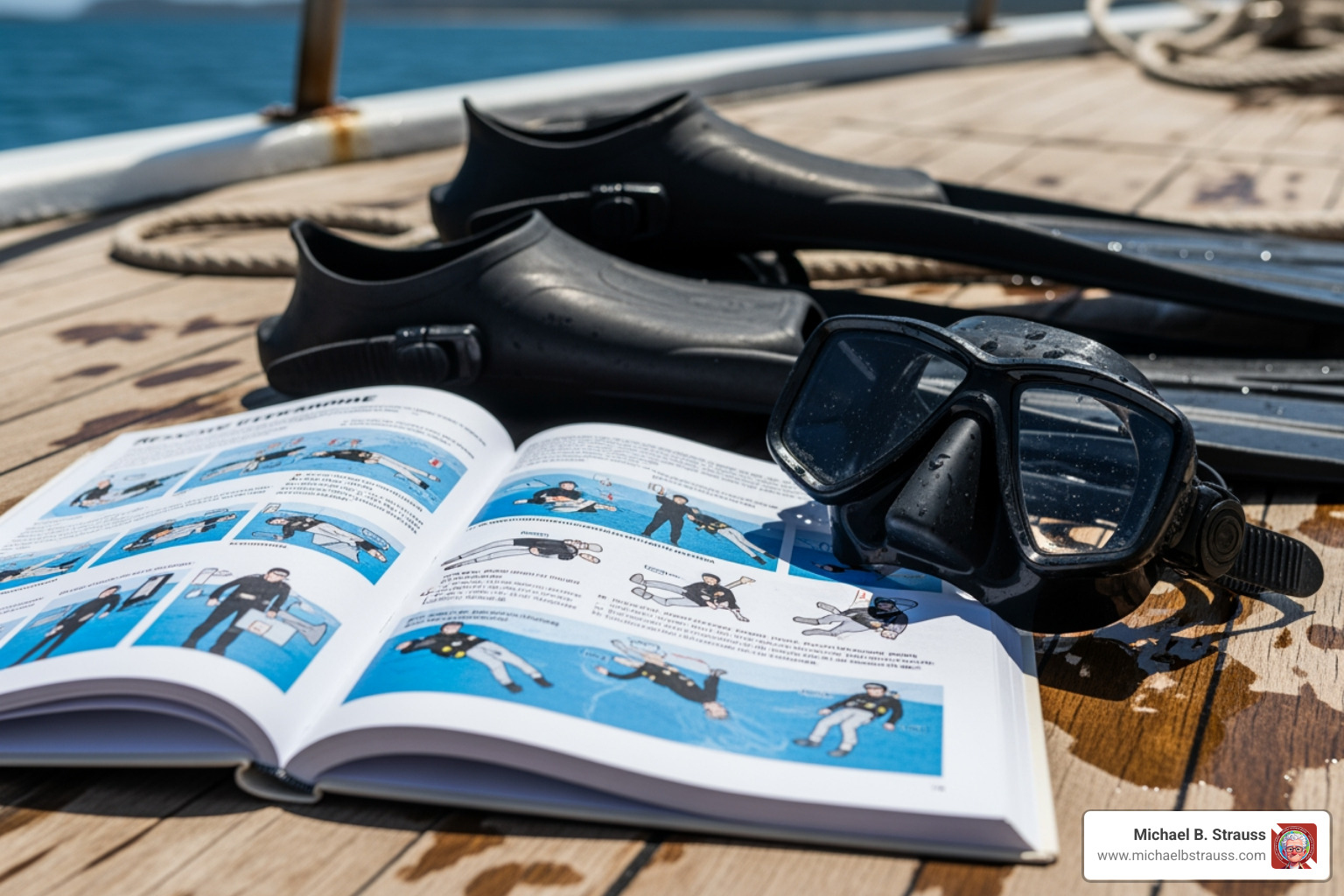
A rescue diver book is the essential manual for one of scuba diving's most transformative courses. It covers:
- Self-rescue techniques for managing your own emergencies.
- Recognizing diver stress to spot problems before they escalate.
- Emergency management, including using oxygen kits and handling accidents.
- Rescue procedures for helping panicked or unresponsive divers.
- First aid protocols for common diving injuries.
Widely considered the most valuable continuing education, the rescue diver course is a favorite among divers because it fundamentally changes your approach to diving. Unlike earlier certifications focused on personal skills, this training shifts your attention outward. You learn to identify minor issues before they become major emergencies, building confidence and making you the dive buddy everyone wants on their team.
Training involves knowledge development with your manual, skill practice in controlled water, and realistic open-water scenarios. The book is your foundation, covering everything from the psychology of panic to towing an unconscious diver.
Whether you aim for professional dive leadership or simply want to be a safer, more capable recreational diver, the rescue diver manual is your roadmap to life-saving skills.
Decoding the Rescue Diver Book and Course Content
The rescue diver book and its course are about changing your mindset. You'll shift from focusing on your own dive to developing a keen awareness of your buddies and surroundings. This training equips you to prevent problems and manage them effectively, making every dive safer for everyone.
Core Knowledge and Skills You'll Master
Your journey through the rescue diver book and training will build both competence and confidence. The core knowledge development prepares you for the practical application of these skills, ensuring you understand the "why" behind every "how."
Here are the essential skills you will master:
- Self-Rescue: Learn to handle your own equipment issues, cramps, or disorientation calmly and efficiently.
- Recognizing Diver Stress: Identify subtle signs of stress in other divers to intervene before a problem escalates.
- Emergency Management: Master scene management, how to call for help, and the use of emergency oxygen.
- Rescuing Panicked Divers: Learn techniques to safely approach and assist a panicked diver, minimizing risk to everyone.
- Rescuing Unresponsive Divers: Practice challenging skills like in-water rescue breathing and bringing an unconscious diver to the surface.
- First Aid for Common Dive Emergencies: Focus on dive-specific injuries like marine life encounters and barotrauma.
- Understanding the Physiology of Diving Accidents: Gain a deeper understanding of conditions like decompression sickness to make informed decisions during an emergency.
Your rescue diver book serves as an invaluable resource throughout this process, providing the theoretical framework that underpins your practical skills.
The Path to Becoming a Rescue-Ready Diver
Becoming a certified rescue diver is a journey that many consider to be one of the most rewarding steps in their diving education. It’s a commitment to being a more capable, confident, and responsible diver.
Let's break down the path:
Prerequisites: Before starting this transformative course, there are a few essential building blocks:
- An advanced diver certification (or equivalent) that includes underwater navigation training.
- Current CPR and first aid certification from a recognized organization, completed within the past 24 months.
- The minimum age requirement for the course is 12 years old.
- Good physical health is a must. Before enrolling, always review the Diver Medical form to ensure you won't need a physician’s approval to dive.
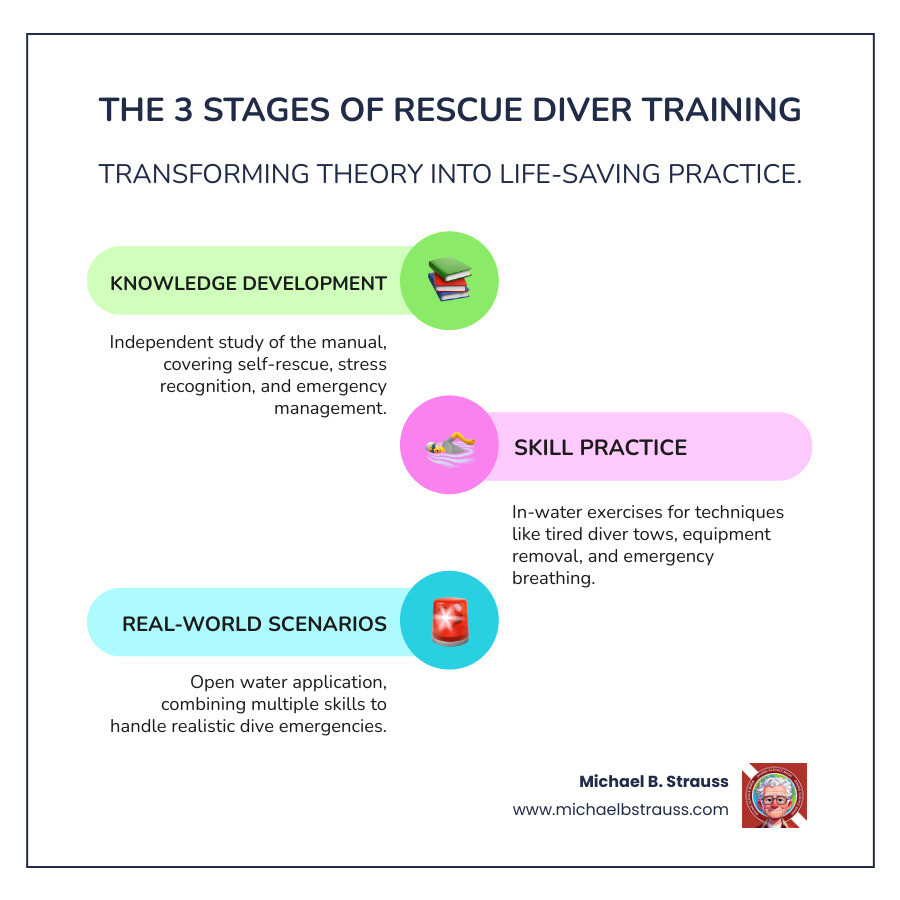
Course Structure: The rescue diver course is structured to blend theoretical knowledge with extensive practical application in three main parts:
- Knowledge Development: This is where your rescue diver book comes into play. You'll engage in independent study, often through an e-learning platform, covering the theory of self-rescue, stress recognition, and emergency management.
- Rescue Training Exercises: Once you've mastered the theory, you'll move into in-water training. Under an instructor's guidance, you'll practice a variety of rescue skills in a controlled environment.
- Open Water Rescue Scenarios: The culmination of your training involves applying all your skills in realistic open water scenarios that mimic real-life emergencies, building critical thinking skills and confidence.
The entire course typically takes between 4-7 days to complete. It's an intensive but incredibly rewarding experience.
Essential Gear and Associated Considerations
As you prepare for the rescue diver course, understanding the necessary equipment is key. While you’ll use your standard scuba gear, a few specialized items are crucial for rescue scenarios.
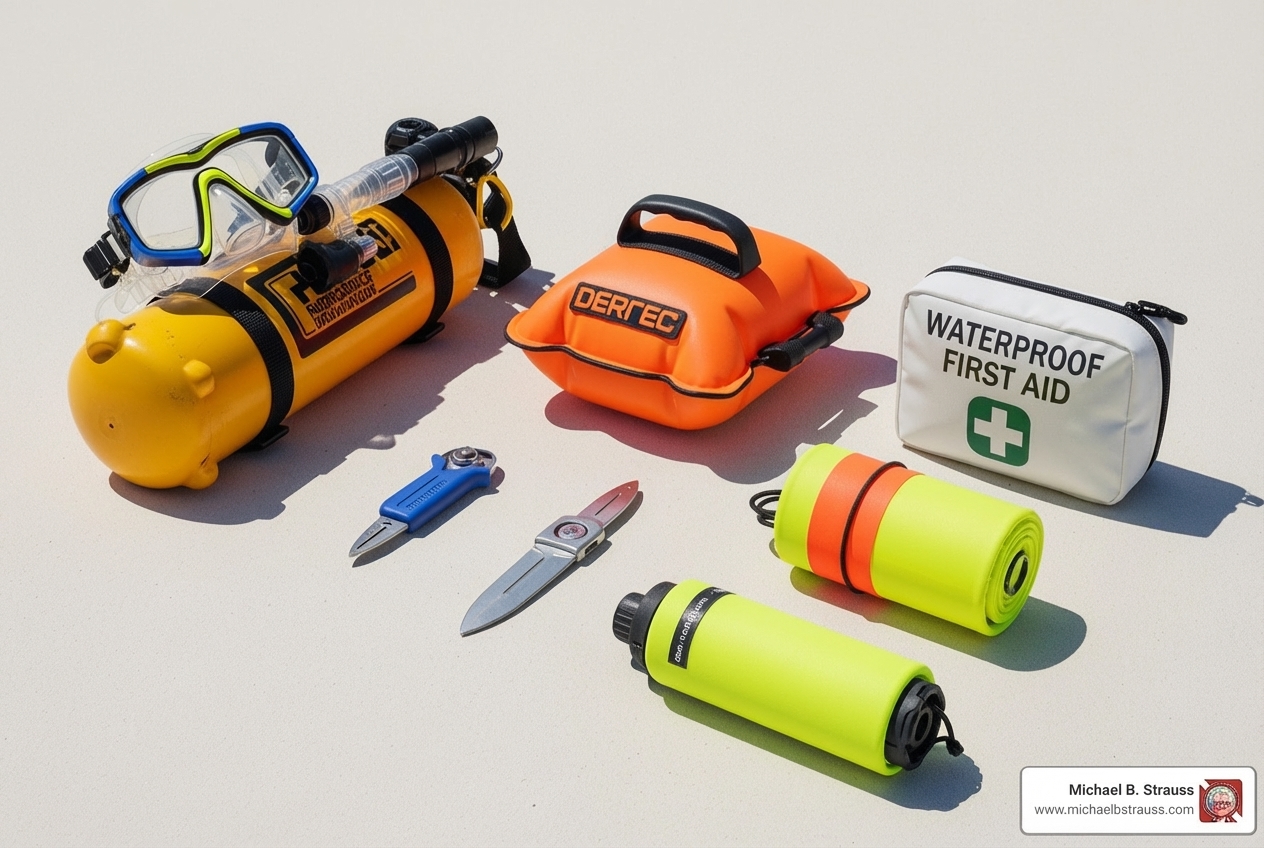
Standard Scuba Gear: You'll need your complete set of basic scuba gear, including a mask, snorkel, fins, BCD, regulator, pressure gauge, dive computer, exposure suit, and weights. Using your own familiar gear is highly recommended for comfort and efficiency.
Specialized Rescue Equipment: Beyond your standard kit, a few specialized items are essential:
- Pocket Mask: This portable device is used for rescue breathing, allowing you to administer artificial respiration while maintaining a safety barrier.
- Emergency Oxygen Kit: Understanding how to deploy and use an emergency oxygen kit is a critical part of the course.
- Dive Accident Management Slate: This waterproof slate helps you organize and manage accident information during a stressful event.
Associated Considerations: Be aware of the types of costs involved:
- Course Fees: These cover instruction and certification and can vary by dive center.
- Materials: This includes the rescue diver book and other learning materials, which are often sold as a package by the dive center.
- Equipment Rental: If you don't own all the required gear, there will be costs for renting it.
- Travel and Accommodation: Factor these in if you're taking the course while traveling.
It's always a good idea to contact a local dive center or resort to get specific information on pricing and what's included in their rescue diver course offerings.
Beyond the Certification: A Lifetime of Confident Diving
Becoming a rescue diver is a milestone that extends far beyond a certification card. It’s an investment in your diving future, changing your skills and your entire approach to underwater exploration. The course instills a profound sense of confidence and awareness, making you a better, safer diver and dive buddy.
What to Look for in a Good Rescue Diver Book
The rescue diver book is your primary reference throughout the course and a valuable resource for years to come. An effective manual goes beyond listing steps to explain the "why" behind the techniques.
When evaluating a rescue diver book, look for these characteristics:
- Psychology of Rescue: A good manual explains the psychological aspects of a rescue, including managing panic and stress in both the victim and rescuer.
- Accident Management Flowcharts: Clear flowcharts simplify complex decision-making during an emergency.
- Detailed Skill Descriptions: Step-by-step instructions, often with illustrations, for each rescue technique.
- Equipment Considerations: Thorough information on the use and maintenance of rescue equipment like oxygen kits and pocket masks.
- Post-Rescue Procedures: Guidance on care after the rescue, including first aid, monitoring, and coordinating with emergency services.
- A Focus on the "Why" Behind the "How": The best books explain the rationale behind each procedure, allowing you to adapt skills to different situations.
Here's a list of key chapters to expect in a comprehensive rescue diver book:
- The Psychology of Rescue
- Recognizing Diver Stress
- Accident Management
- In-water Rescue Skills
- Emergency Oxygen Administration
- First Aid for Diving Injuries
- Missing Diver Procedures
- Making an Emergency Assistance Plan
The Long-Term Benefits of Rescue Training
The benefits of becoming a Rescue Diver permeate every aspect of your diving life. This certification is truly transformative.
- Increased Confidence: Knowing you can handle emergencies makes you a more secure and relaxed diver.
- Becoming a Better Dive Buddy: The course shifts your focus to the well-being of your entire team, making you a more proactive and reliable partner.
- Improved Problem-Solving: Dynamic training scenarios hone your ability to think critically and act decisively under pressure.
- Situational Awareness: You develop a heightened awareness of your surroundings and other divers, helping you spot potential issues early.
- Understanding the Body's Response to Diving: The course provides crucial insights into diving physiology.
- Mental and Physical Strength: The course builds both mental and physical resilience, teaching you to perform effectively under stress.
The rescue diver course is one of the most rewarding and challenging continuing education courses that will change the way you scuba dive, leaving you with a lasting sense of accomplishment and preparedness.
Your Next Steps After the Rescue Diver Book
Completing the rescue diver course and mastering the knowledge in your rescue diver book opens up a world of possibilities for advanced recreational diving and professional roles.
Professional Path: The rescue diver certification is a fundamental prerequisite for professional ratings like divemaster and instructor. It's the first major step if you dream of leading dives, teaching others, or participating in public safety diving.
Advanced Recreational Path: This certification is a key step toward achieving the prestigious master scuba diver rating, the highest non-professional level in recreational diving. This rating typically requires a set number of logged dives and specialty certifications after becoming a rescue diver.
Mastering Rescue Skills: The learning doesn't stop with certification. Regular practice and refresher courses are essential to keep your skills sharp and ready for a real-world scenario. Continuous engagement with the material from your rescue diver book ensures you remain prepared.
The rescue diver course, guided by a thorough rescue diver book, is not just a certification; it's a commitment to safety, a gateway to advanced training, and a profound step in your evolution as a responsible and capable diver.
Ready to deepen your understanding of dive safety? Get your copy of Diving Science Revisited today!
DISCLAIMER: Articles are for "EDUCATIONAL PURPOSES ONLY", not to be considered advice or recommendations.


