Read story

What You Need to Know About Full Face Scuba Masks

Full face scuba masks are diving masks that seal your entire face, integrating the breathing system so you can breathe naturally through your nose and mouth. This differs from traditional setups with a separate mask and mouthpiece regulator.

Key Features of Full Face Scuba Masks:

  • Complete facial coverage - Seals around the entire face.
  • Integrated breathing system - Regulator is built into the mask.
  • Natural breathing - Allows breathing through the nose and mouth.
  • Wide field of vision - Offers a larger viewing window.
  • Communication ready - Supports underwater communication systems.
  • Improved safety - Maintains a breathable air space if a diver loses consciousness.

While common in professional, military, and public safety diving for protection in cold or contaminated water, some recreational divers use them for comfort and communication. Modern masks, descended from Yves le Prieur's 1933 invention, use advanced materials to improve on early designs.

However, they are bulkier, more expensive, and require specialized training compared to traditional gear. Their larger internal volume can also increase the risk of CO2 retention if not used correctly.
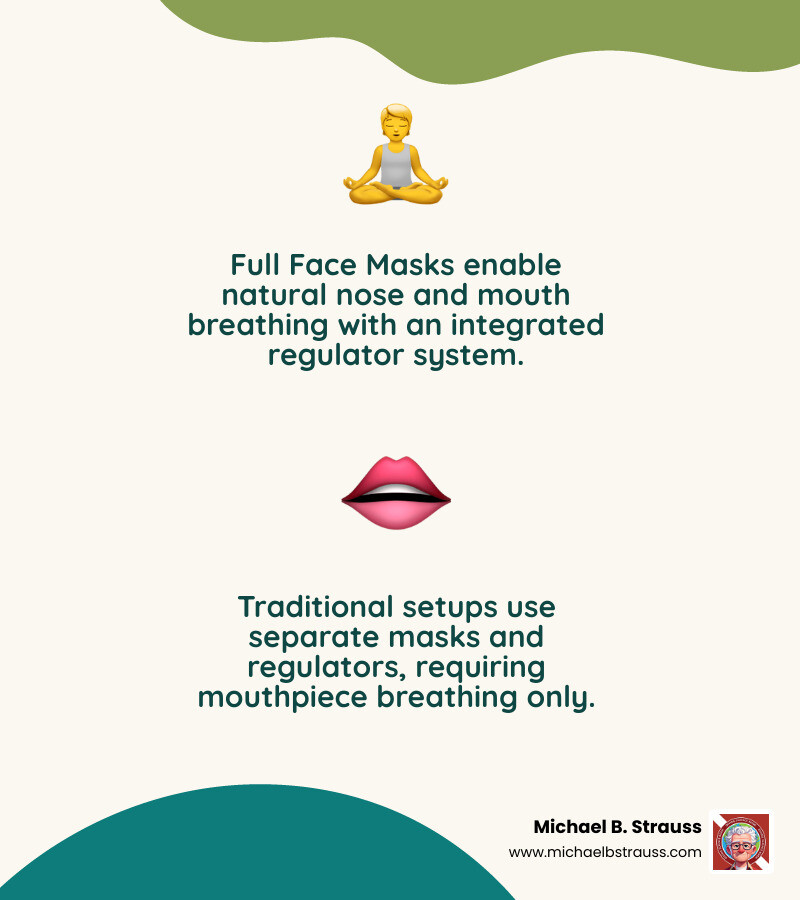
Infographic comparing full face scuba mask components versus traditional mask and regulator setup, showing the integrated breathing system, full facial seal, oro-nasal pocket, surface air valve, wider field of view, and strap system of FFMs compared to the separate mask, mouthpiece regulator, and limited breathing options of traditional setups - full face scuba masks infographic 2_facts_emoji_nature

Simple guide to full face scuba masks terms:

The Complete Guide to Full Face Scuba Masks

Advantages and Applications

A full face scuba mask (FFM) allows you to breathe through your nose and mouth, which feels more natural and eliminates the jaw fatigue associated with gripping a traditional mouthpiece. This comfort is a significant advantage on long dives.

FFMs also offer a panoramic viewing window for an expansive field of vision, improving situational awareness. For cold-water diving, they provide excellent thermal protection by covering the entire face.

Safety is a key benefit. If a diver loses consciousness, the mask stays sealed, maintaining a breathable air space. This full-face seal is also crucial for public safety and commercial divers working in contaminated water, as it protects the eyes, nose, and mouth. A 1987 study by Norfleet, Hickey, and Lundgren provided early scientific insights into breathing dynamics with FFMs.

Perhaps the most transformative feature is the ability to integrate communication systems, allowing for clear underwater conversations. This is indispensable for instructors, technical divers, and professional teams who rely on coordination. As detailed in this overview from ResearchGate, FFMs are standard equipment for commercial, military, and scientific divers. While less common recreationally, many divers adopt them for the added comfort, warmth, and communication capabilities.

professional diver using an FFM with communication gear - full face scuba masks

Design, Construction, and Key Features

Modern full face scuba masks are products of decades of engineering. There are two main types:

  • Soft skirt masks: Use flexible silicone for a comfortable seal, common in recreational and professional diving.
  • Band-masks: Feature rigid frames and are used in heavy-duty commercial diving, often with surface-supplied air.

Key components include a large faceplate made of tempered glass or polycarbonate for a wide, clear view. The frame provides structure, while a high-grade silicone skirt creates a watertight seal. A multi-point "spider" strap system distributes pressure evenly for a secure fit.

The most critical internal feature is the oro-nasal pocket, a small inner mask that seals over the nose and mouth. This pocket reduces the "dead space" where exhaled CO2 can accumulate, directs moist air away to prevent fogging, and allows the diver to pinch their nose for equalization. The breathing regulator is either built-in or attached via a quick-connect system. Many masks also have a Surface Air Valve (SAV) to breathe ambient air on the surface.

Safety, CO2 Buildup, and Potential Drawbacks

While FFMs offer safety advantages, they require specific training. Emergency procedures, such as switching to a backup air source (bailout), are different from traditional scuba and must be practiced until they are second nature. Similarly, you must learn the proper technique for clearing a flooded FFM.

Equalization is achieved via built-in mechanisms like soft nose pockets or adjustable blocks. The mask's larger volume can also slightly increase buoyancy, requiring minor weight adjustments.

The most significant safety concern is CO2 buildup (hypercapnia). The large internal volume of an FFM creates more dead space than a traditional regulator. Re-breathing exhaled CO2 can lead to headaches, confusion, and impaired judgment. Modern masks mitigate this with efficient oro-nasal pockets and airflow designs that flush out exhaled gas. However, design quality varies, and it's crucial to choose a mask from a reputable manufacturer that adheres to safety standards like CE EN-250. Understanding such physiological risks is vital, similar to knowing why and at what sites decompression sickness can occur.

Other drawbacks include higher cost, increased bulk, and the necessity of specialized training. PADI and other agencies offer full-face mask specialty courses that are highly recommended.

Choosing, Fitting, and Maintaining Your Full Face Scuba Mask

Choosing the right full face scuba mask starts with fit. The mask must create a perfect seal without uncomfortable pressure points. Try on several models to find one that matches your facial shape.

To check the fit, place the mask on your face without the straps and inhale lightly through your nose. It should seal against your face from suction alone. If it holds, adjust the straps for a snug, even fit—over-tightening can break the seal. Ensure you can easily operate the equalization mechanism. Also, consider regulator compatibility and whether the mask supports communication systems if you need them.
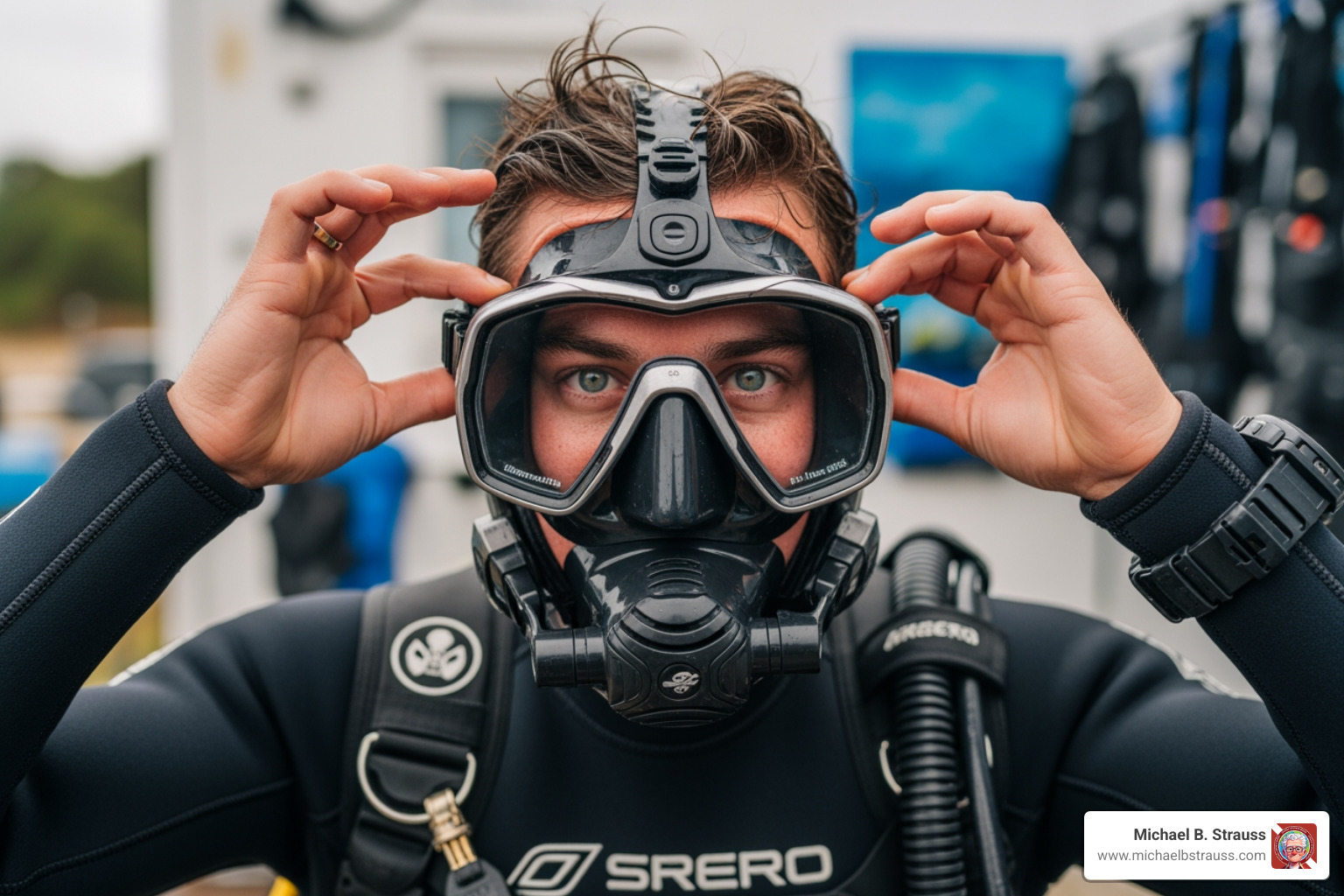
diver performing a fit check on a full face scuba mask - full face scuba masks

Proper maintenance is crucial for safety and longevity.

  • After every dive: Rinse thoroughly with fresh water.
  • Periodically: Clean with mild soap and water per the manufacturer's instructions.
  • Before each use: Inspect for cracks, tears, or damage to the skirt, straps, and regulator.
  • Storage: Keep in a cool, dry place away from direct sunlight, preferably in a protective case.
  • Servicing: Have the integrated regulator professionally serviced annually or as recommended by the manufacturer.

The Evolution of Full Face Scuba Masks and Communications

The modern full face scuba mask has evolved significantly from early concepts. Yves le Prieur's 1933 invention was a key milestone, with military and commercial needs driving much of the development throughout the 20th century. You can see this progression in collections of historical diving masks.
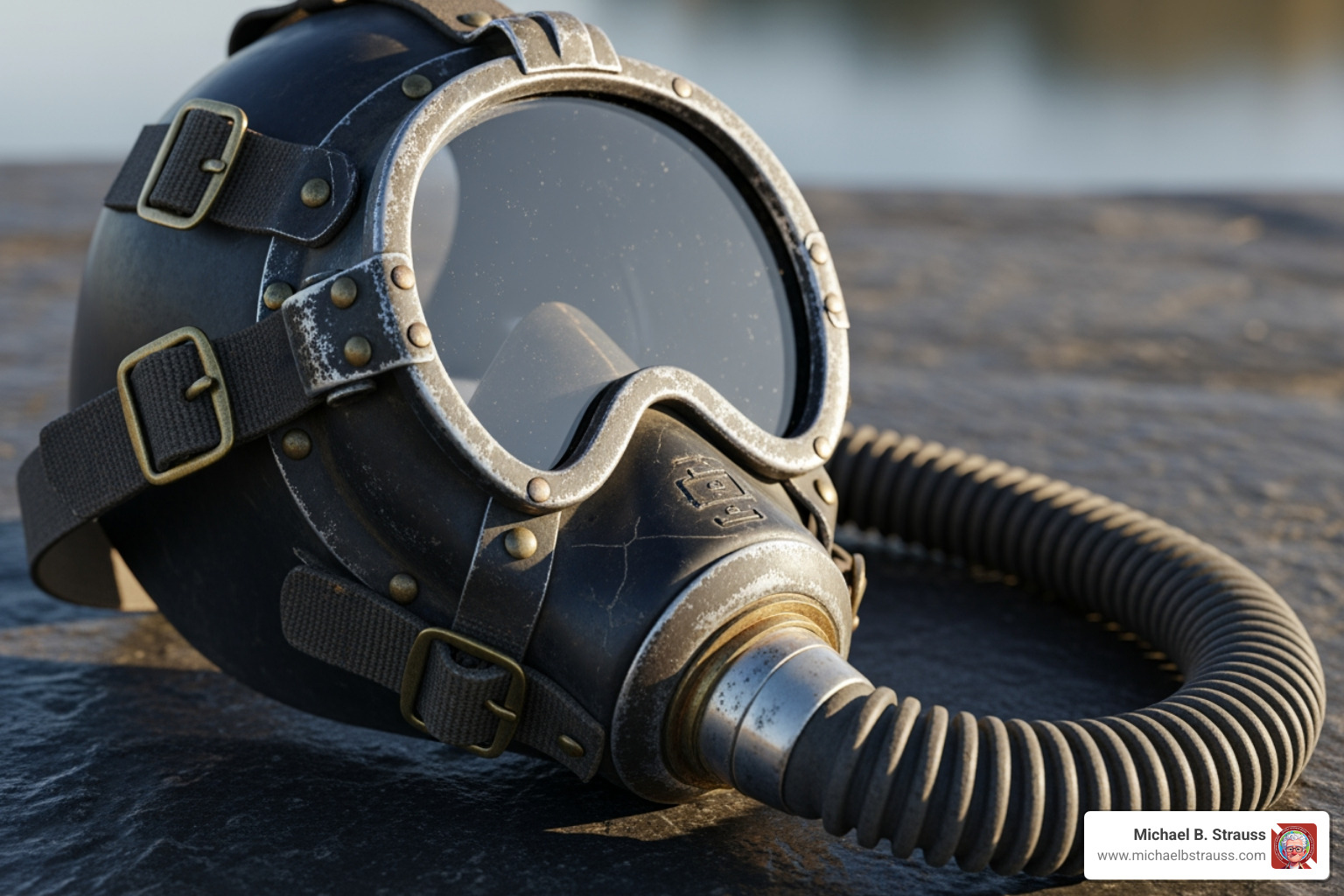
vintage full-face diving mask - full face scuba masks

Advances in materials like high-grade silicone and impact-resistant polycarbonate, along with design breakthroughs like the oro-nasal pocket, have made today's masks safer and more comfortable.

The integration of communication systems has been one of the most transformative developments.

  • Hard-wired systems: Use physical cables to connect divers to the surface, providing reliable, clear audio essential for commercial and scientific work.
  • Wireless systems: Use ultrasonic technology to transmit voice through water, offering freedom of movement for recreational and professional divers.

This ability to speak underwater has revolutionized diver training, safety, and teamwork, turning FFMs into indispensable tools for many applications.

Final Thoughts on Diving with a Full Face Mask

Full face scuba masks offer a unique diving experience with benefits like natural breathing, no jaw fatigue, warmth, and the ability to communicate underwater. The added security of a mask that stays in place, even if a diver loses consciousness, is a significant safety advantage.

However, these benefits come with a critical responsibility: safety first, always. FFMs are not simply larger masks; they are specialized equipment requiring a different skill set. Proper training is essential to learn emergency procedures like handling a flood, executing a bailout, and managing the risks of CO2 buildup. This training is the foundation for diving safely with an FFM.

Dr. Michael B. Strauss has dedicated his career to diving safety, and his comprehensive books emphasize that knowledge is your best dive buddy. Understanding the science behind your equipment and your body's response to the underwater environment is key to becoming a safer, more confident diver.

FFMs can improve your dives in remarkable ways, but only with the right preparation. Get the training, understand your gear, and never stop learning.

To dive deeper into the science that keeps us safe underwater, get your copy of Diving Science Revisited here: https://www.bestpub.com/view-all-products/product/diving-science-revisited/category_pathway-48.html

DISCLAIMER: Articles are for "EDUCATIONAL PURPOSES ONLY", not to be considered advice or recommendations.

Download Full PDF
Tags:

What You Need to Know About Full Face Scuba Masks

Full face scuba masks are diving masks that seal your entire face, integrating the breathing system so you can breathe naturally through your nose and mouth. This differs from traditional setups with a separate mask and mouthpiece regulator.

Key Features of Full Face Scuba Masks:

  • Complete facial coverage - Seals around the entire face.
  • Integrated breathing system - Regulator is built into the mask.
  • Natural breathing - Allows breathing through the nose and mouth.
  • Wide field of vision - Offers a larger viewing window.
  • Communication ready - Supports underwater communication systems.
  • Improved safety - Maintains a breathable air space if a diver loses consciousness.

While common in professional, military, and public safety diving for protection in cold or contaminated water, some recreational divers use them for comfort and communication. Modern masks, descended from Yves le Prieur's 1933 invention, use advanced materials to improve on early designs.

However, they are bulkier, more expensive, and require specialized training compared to traditional gear. Their larger internal volume can also increase the risk of CO2 retention if not used correctly.

Infographic comparing full face scuba mask components versus traditional mask and regulator setup, showing the integrated breathing system, full facial seal, oro-nasal pocket, surface air valve, wider field of view, and strap system of FFMs compared to the separate mask, mouthpiece regulator, and limited breathing options of traditional setups - full face scuba masks infographic 2_facts_emoji_nature

Simple guide to full face scuba masks terms:

The Complete Guide to Full Face Scuba Masks

Advantages and Applications

A full face scuba mask (FFM) allows you to breathe through your nose and mouth, which feels more natural and eliminates the jaw fatigue associated with gripping a traditional mouthpiece. This comfort is a significant advantage on long dives.

FFMs also offer a panoramic viewing window for an expansive field of vision, improving situational awareness. For cold-water diving, they provide excellent thermal protection by covering the entire face.

Safety is a key benefit. If a diver loses consciousness, the mask stays sealed, maintaining a breathable air space. This full-face seal is also crucial for public safety and commercial divers working in contaminated water, as it protects the eyes, nose, and mouth. A 1987 study by Norfleet, Hickey, and Lundgren provided early scientific insights into breathing dynamics with FFMs.

Perhaps the most transformative feature is the ability to integrate communication systems, allowing for clear underwater conversations. This is indispensable for instructors, technical divers, and professional teams who rely on coordination. As detailed in this overview from ResearchGate, FFMs are standard equipment for commercial, military, and scientific divers. While less common recreationally, many divers adopt them for the added comfort, warmth, and communication capabilities.

professional diver using an FFM with communication gear - full face scuba masks

Design, Construction, and Key Features

Modern full face scuba masks are products of decades of engineering. There are two main types:

  • Soft skirt masks: Use flexible silicone for a comfortable seal, common in recreational and professional diving.
  • Band-masks: Feature rigid frames and are used in heavy-duty commercial diving, often with surface-supplied air.

Key components include a large faceplate made of tempered glass or polycarbonate for a wide, clear view. The frame provides structure, while a high-grade silicone skirt creates a watertight seal. A multi-point "spider" strap system distributes pressure evenly for a secure fit.

The most critical internal feature is the oro-nasal pocket, a small inner mask that seals over the nose and mouth. This pocket reduces the "dead space" where exhaled CO2 can accumulate, directs moist air away to prevent fogging, and allows the diver to pinch their nose for equalization. The breathing regulator is either built-in or attached via a quick-connect system. Many masks also have a Surface Air Valve (SAV) to breathe ambient air on the surface.

Safety, CO2 Buildup, and Potential Drawbacks

While FFMs offer safety advantages, they require specific training. Emergency procedures, such as switching to a backup air source (bailout), are different from traditional scuba and must be practiced until they are second nature. Similarly, you must learn the proper technique for clearing a flooded FFM.

Equalization is achieved via built-in mechanisms like soft nose pockets or adjustable blocks. The mask's larger volume can also slightly increase buoyancy, requiring minor weight adjustments.

The most significant safety concern is CO2 buildup (hypercapnia). The large internal volume of an FFM creates more dead space than a traditional regulator. Re-breathing exhaled CO2 can lead to headaches, confusion, and impaired judgment. Modern masks mitigate this with efficient oro-nasal pockets and airflow designs that flush out exhaled gas. However, design quality varies, and it's crucial to choose a mask from a reputable manufacturer that adheres to safety standards like CE EN-250. Understanding such physiological risks is vital, similar to knowing why and at what sites decompression sickness can occur.

Other drawbacks include higher cost, increased bulk, and the necessity of specialized training. PADI and other agencies offer full-face mask specialty courses that are highly recommended.

Choosing, Fitting, and Maintaining Your Full Face Scuba Mask

Choosing the right full face scuba mask starts with fit. The mask must create a perfect seal without uncomfortable pressure points. Try on several models to find one that matches your facial shape.

To check the fit, place the mask on your face without the straps and inhale lightly through your nose. It should seal against your face from suction alone. If it holds, adjust the straps for a snug, even fit—over-tightening can break the seal. Ensure you can easily operate the equalization mechanism. Also, consider regulator compatibility and whether the mask supports communication systems if you need them.

diver performing a fit check on a full face scuba mask - full face scuba masks

Proper maintenance is crucial for safety and longevity.

  • After every dive: Rinse thoroughly with fresh water.
  • Periodically: Clean with mild soap and water per the manufacturer's instructions.
  • Before each use: Inspect for cracks, tears, or damage to the skirt, straps, and regulator.
  • Storage: Keep in a cool, dry place away from direct sunlight, preferably in a protective case.
  • Servicing: Have the integrated regulator professionally serviced annually or as recommended by the manufacturer.

The Evolution of Full Face Scuba Masks and Communications

The modern full face scuba mask has evolved significantly from early concepts. Yves le Prieur's 1933 invention was a key milestone, with military and commercial needs driving much of the development throughout the 20th century. You can see this progression in collections of historical diving masks.

vintage full-face diving mask - full face scuba masks

Advances in materials like high-grade silicone and impact-resistant polycarbonate, along with design breakthroughs like the oro-nasal pocket, have made today's masks safer and more comfortable.

The integration of communication systems has been one of the most transformative developments.

  • Hard-wired systems: Use physical cables to connect divers to the surface, providing reliable, clear audio essential for commercial and scientific work.
  • Wireless systems: Use ultrasonic technology to transmit voice through water, offering freedom of movement for recreational and professional divers.

This ability to speak underwater has revolutionized diver training, safety, and teamwork, turning FFMs into indispensable tools for many applications.

Final Thoughts on Diving with a Full Face Mask

Full face scuba masks offer a unique diving experience with benefits like natural breathing, no jaw fatigue, warmth, and the ability to communicate underwater. The added security of a mask that stays in place, even if a diver loses consciousness, is a significant safety advantage.

However, these benefits come with a critical responsibility: safety first, always. FFMs are not simply larger masks; they are specialized equipment requiring a different skill set. Proper training is essential to learn emergency procedures like handling a flood, executing a bailout, and managing the risks of CO2 buildup. This training is the foundation for diving safely with an FFM.

Dr. Michael B. Strauss has dedicated his career to diving safety, and his comprehensive books emphasize that knowledge is your best dive buddy. Understanding the science behind your equipment and your body's response to the underwater environment is key to becoming a safer, more confident diver.

FFMs can improve your dives in remarkable ways, but only with the right preparation. Get the training, understand your gear, and never stop learning.

To dive deeper into the science that keeps us safe underwater, get your copy of Diving Science Revisited here: https://www.bestpub.com/view-all-products/product/diving-science-revisited/category_pathway-48.html

DISCLAIMER: Articles are for "EDUCATIONAL PURPOSES ONLY", not to be considered advice or recommendations.