Why Your Health is Your Most Important Dive Gear
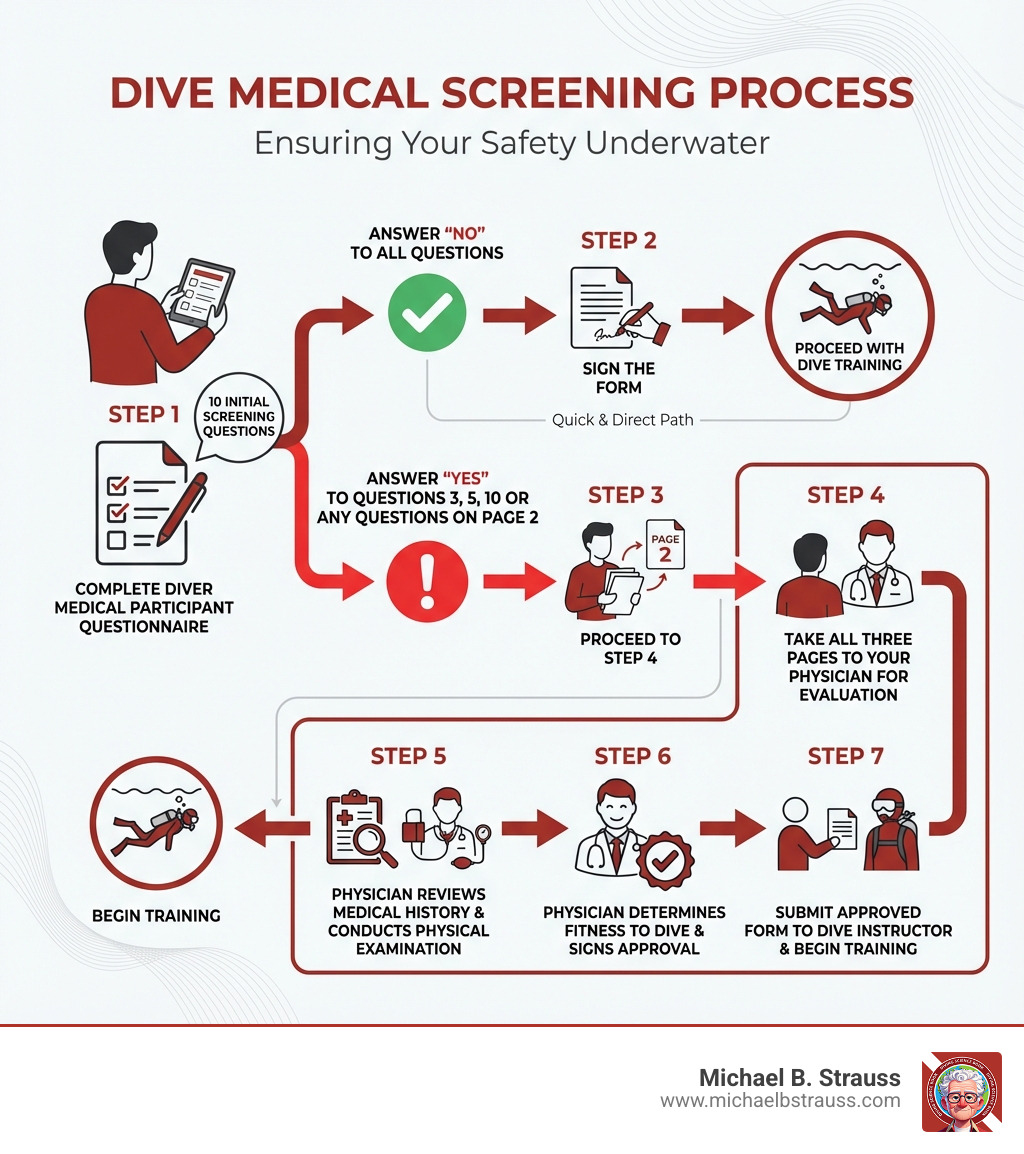
A dive medical form is a mandatory health screening questionnaire that assesses whether you're physically and mentally fit to dive safely. If you answer "NO" to all initial questions, you can proceed with dive training. If you answer "YES" to specific health questions, you must get physician approval before diving.
Quick Answer: Understanding Dive Medical Forms
- Purpose: Identify medical conditions that could be hazardous while diving.
- Who needs it: All new divers, students in dive courses, and instructors.
- Key document: Diver Medical Participant Questionnaire (endorsed by UHMS, WRSTC, and DAN).
- Process: Complete questionnaire → If "YES" to certain questions → See physician → Get approval.
- Result: Ensures your safety and provides emergency medical information.
Developed by leading diving and hyperbaric medical experts, these forms are not barriers but critical safety tools. Their primary purpose is to identify medical conditions that might become hazardous underwater, where your body undergoes significant physiological changes. Recreational diving requires good physical and mental health, and this initial screening helps prevent emergencies before they happen.
A "YES" answer does not automatically disqualify you. It simply means a physician must assess your specific condition to determine if you can dive safely. The form also provides vital information to emergency responders if you're unable to communicate. This is crucial, as nearly 30% of recreational diving fatalities involve a cardiac event. This standardized approach, endorsed by organizations like the Undersea & Hyperbaric Medical Society (UHMS), World Recreational Scuba Training Council (WRSTC), and Divers Alert Network (DAN), offers peace of mind for everyone.
Terms related to dive medical form:
Who Needs to Complete a Form?
Completing a dive medical form is standard practice for most participants in diving activities. You will likely need to complete one if you are:
- A new diver enrolling in your first certification course.
- A student diver taking any continuing education course (e.g., Advanced Open Water, Rescue Diver).
- A dive professional, such as an instructor or divemaster.
- A freediver, as freediving places unique demands on the body.
- A diver with known risk factors, such as being over 45 with high cholesterol, high blood pressure, or a family history of heart disease.
- Returning to diving after a significant illness, surgery, or long period of inactivity.
Dr. Michael B. Strauss emphasizes that treating your health as your primary piece of dive gear is one of the most effective ways to protect yourself and your dive buddies. A thoughtfully completed dive medical form is the first practical step in that safety mindset.
Decoding the Dive Medical Form: From Questionnaire to Physician's Approval

The dive medical form process is a straightforward journey from self-assessment to, if needed, a physician's evaluation. Honesty and thoroughness are key to ensuring your safety and making the most of the expert guidance shared in Dr. Michael B. Strauss's diving texts. The form uses a branching logic, where your answers determine if a medical consultation is necessary.
How the Diver Medical Participant Questionnaire Works
The Diver Medical Participant Questionnaire begins with 10 "YES/NO" questions about your general health.
- If you answer "NO" to all 10 questions, a physician's evaluation is generally not required. You can sign the form and proceed with your dive activities.
- If you answer "YES" to questions 3, 5, or 10, or to any questions on page 2, a medical evaluation is required. This does not mean you cannot dive, but a doctor must assess your fitness.
A "YES" answer will direct you to specific "Boxes" (A-G) that categorize potential issues for a detailed physician review. When completing the form, "moderate exercise" is defined as the ability to walk 1.6 km (one mile) in 14 minutes or swim 200 meters/yards without rest. Also, be aware that most prescription medications (excluding birth control or certain anti-malarials) will require a "YES" answer and subsequent review.
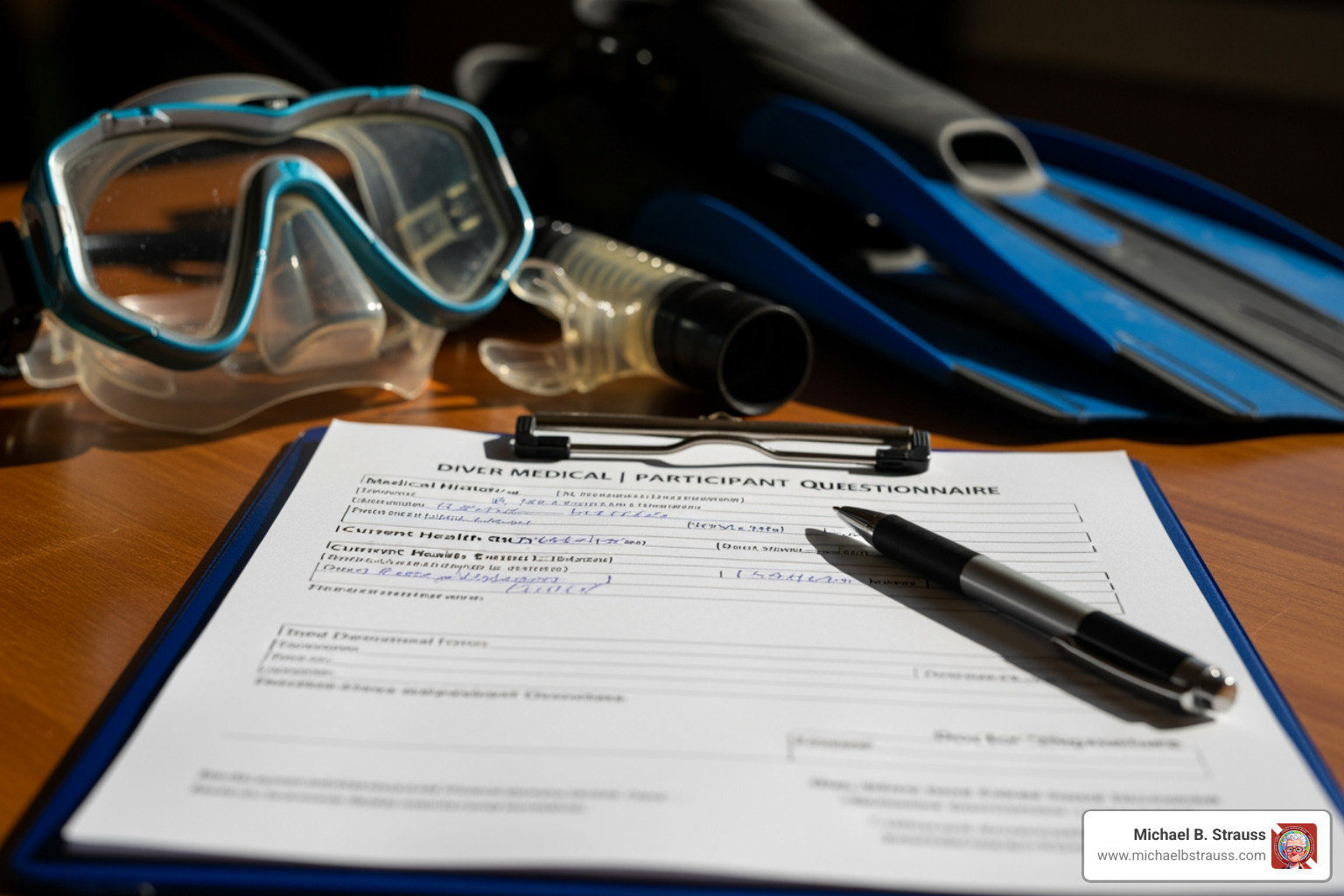
The Diver Medical Participant Questionnaire is endorsed by UHMS, WRSTC, and DAN and is available in multiple languages. You can access the official form here: Diver Medical Participant Questionnaire.
When to See a Doctor: The Physician's Role in the Dive Medical Form Process
If your answers require a medical evaluation, the next step is to consult a physician for a fitness-to-dive assessment. The doctor will review your completed questionnaire, discuss your medical history, and conduct a physical examination focused on conditions that could be problematic underwater. In some cases, they may refer you to a specialist.
It is ideal to see a physician familiar with diving medicine. If your regular doctor is unsure, they can consult with a dive medicine expert or contact DAN for a referral. Only medical professionals can provide medical clearance to dive. For physicians, the Diving Medical Guidance for Physician for Recreational Diving is an invaluable resource: Diving Medical Guidance for Physician for Recreational Diving.
Dr. Michael B. Strauss's expertise, as detailed in resources such as Evaluation and Management of Pain-Related Medical Problems of Diving, underscores the importance of an informed medical evaluation.
After the assessment, the physician will sign the evaluation form, clearing you to dive (sometimes with restrictions) or deeming you unfit. This approval is your green light for safe diving and is typically valid for one year.
Diving Fitness: Key Medical Considerations and Resources
Ensuring your fitness to dive involves understanding how your body interacts with the underwater environment. Certain medical conditions can pose significant risks, which the medical evaluation process helps to identify.
Medical Conditions That Can Affect Your Dive
The underwater world is unforgiving of certain medical issues. Key considerations include:
- Cardiovascular Conditions: The heart works harder underwater. A history of angina, heart failure, heart attack, or stroke are serious concerns. High blood pressure and high cholesterol also warrant a physician's review.
- Pulmonary Conditions: Lungs are directly exposed to pressure changes. Conditions that trap air, such as asthma, chronic lung disease, or a history of a collapsed lung (pneumothorax), can be extremely dangerous.
- Neurological Issues: Any condition affecting consciousness, like a history of seizures, stroke, or significant head injury, poses a significant risk.
- Psychological Conditions: Mental health is crucial for handling the demanding underwater environment. Major depression, panic attacks, or claustrophobia require careful consideration.
- Pregnancy: Diving is not recommended during pregnancy due to unknown risks to the fetus from decompression.
- Other Conditions: Diabetes (risk of hypoglycemia), recent gastrointestinal surgery (risk of gas trapping), chronic ear or sinus issues (equalization problems), and limiting musculoskeletal problems all require medical evaluation.
Dr. Michael B. Strauss's work in Decompression Science and Why and at What Sites Decompression Sickness Can Occur further illustrates the science behind these medical considerations.
Returning to Diving After Illness (Including COVID-19)
An acute illness is not compatible with safe diving.
- Colds and Respiratory Issues: Even a common cold can prevent equalization in your ears and sinuses, making diving painful and dangerous.
- Gastrointestinal Distress: Recent issues like diarrhea can cause dehydration, which is a serious risk factor for decompression sickness.
- COVID-19 Recovery: Returning to diving after COVID-19 requires careful consideration, as the virus can affect the lungs and heart. A physician must confirm full recovery and your ability to perform vigorous activity.
Always consult your doctor before returning to diving after any illness. Dr. Michael B. Strauss's insights in Diving Science provide a foundational understanding of the physiological principles that guide these recommendations.
What Resources Are Available for Divers and Physicians?
The diving community offers a robust network of resources for diving safety.
For Divers:
- Self-Assessment: Start with the Diver Medical Participant Questionnaire.
- Expert Advice: Use DAN's "Ask A Medic" service for non-emergency questions or to find a physician experienced in dive medicine.
- Guidelines: Explore resources from UHMS and DAN.
- COVID-19: Some operators may require a COVID-19 Health & Diving Declaration Form.
For Physicians:
- Evaluation Forms: Use the Diver Medical Physician's Evaluation Form and the detailed Diving Medical Guidance for Physician.
- Consultation: Contact DAN's Medical Information Line for consultations on complex cases.
- COVID-19 Guidance: Refer to the Guidance for Medical Examiners During COVID-19 and the Return to Diving after COVID-19 protocols.
What is the Dive Emergency Hotline and When Should it Be Used?
The Divers Alert Network (DAN) operates a 24/7 emergency hotline for dive accidents and injuries like suspected decompression sickness (DCS) or arterial gas embolism (AGE).
In an emergency:
- Call local emergency services first (for example, 911 or 112).
- Then, call the DAN Emergency Hotline. They provide immediate advice, care coordination, and evacuation assistance.
The DAN emergency line in the US is +1-919-684-9111. For non-emergency questions, use their Medical Information Line at +1-919-684-2948.
The world of diving offers unparalleled adventure, and by diligently addressing our health through the dive medical form process, we ensure that every descent is met with confidence and safety. Dr. Michael B. Strauss's comprehensive diving books are essential reads for both novices and experienced divers, offering invaluable insights into diving safety and the science behind our underwater explorations. Exploring these resources alongside a properly completed dive medical form helps prepare you for safe, enjoyable dives for years to come.
To learn more, get your copy of "Diving Science Revisited" by visiting Best Publishing Company: https://www.bestpub.com/view-all-products/product/diving-science-revisited/category_pathway-48.html
DISCLAIMER: Articles are for "EDUCATIONAL PURPOSES ONLY", not to be considered advice or recommendations.


