Read story

Why Clear Communication is a Diver's Lifeline

Effective communicating underwater is more than a convenience; it's a fundamental pillar of diving safety. Beneath the surface, where miscommunication can be life-threatening, divers rely on a toolkit of methods to coordinate, share experiences, and respond to emergencies. The buddy system, the cornerstone of diving safety, depends entirely on clear, unmistakable signals.

The underwater environment presents unique barriers. Sound travels four times faster in water, making it difficult for our ears to locate its source, and our vocal cords cannot produce intelligible speech. Low visibility can obscure visual cues, and essential dive gear like masks and regulators physically impede communication. These challenges make simple conversations impossible, requiring specialized techniques.

Primary Methods for Underwater Communication:

  1. Hand Signals - Standardized gestures for essential messages.
  2. Dive Lights - Flashing patterns to get attention or signal at night.
  3. Slates and Wet Notes - Written messages for complex information.
  4. Sound Devices - Tank bangers or shakers for auditory alerts.
  5. Voice Systems - Through-water communication using full-face masks.
  6. Digital Messaging - Dive computers and apps with text capabilities.

The stakes escalate in technical or emergency situations. Whether coordinating a complex maneuver in a cave, managing a decompression stop, or responding to an equipment malfunction, the ability to convey precise information quickly is critical. Mastering underwater communication ensures divers can manage risks, coordinate actions, and return safely from every dive.
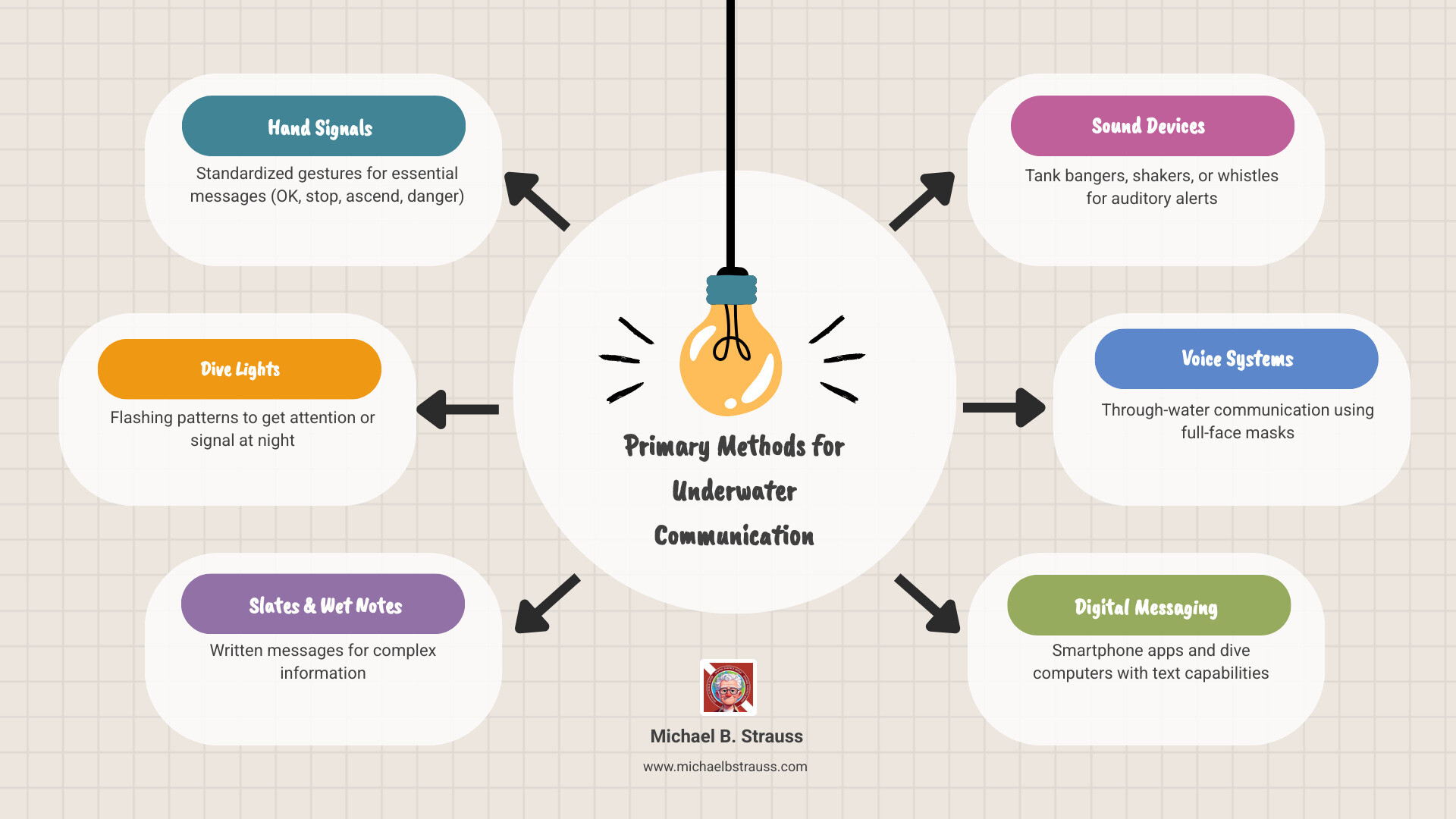
infographic showing primary underwater communication methods with icons for hand signals, dive lights, writing slates, sound devices, voice systems, and digital messaging, each with brief descriptions of when to use them - communicating underwater infographic brainstorm-6-items

Basic communicating underwater vocab:

The Modern Diver's Toolkit for Communicating Underwater

Given the inherent difficulties of the underwater field, divers have developed and adopted a diverse toolkit of communication methods. Understanding and mastering these various methods is key to safe and enjoyable diving.
diver's gear laid out, highlighting a dive slate and a dive light - communicating underwater

The Foundation: Mastering Essential Hand Signals

Hand signals are the universal language of diving, standardized by bodies like the Recreational Scuba Training Council (RSTC) for clarity. They require no special equipment, but their effectiveness is limited by visibility. For signals to be clear, hold them away from your body and illuminate them with a dive light in dark conditions.

Here are 10 must-know hand signals every diver should master:

  1. OK (Question/Answer): Form a circle with your thumb and forefinger to ask or confirm you are okay.
  2. Stop/Hold: Extend your hand flat, palm forward.
  3. Ascend: Point your thumb upwards.
  4. Descend: Point your thumb downwards.
  5. Problem/Danger: Form a fist and point towards the area of concern (e.g., your ear).
  6. Low on Air: Form a fist and tap it against your chest.
  7. Out of Air: Draw a flat hand across your throat. This is a critical emergency signal.
  8. Go This Way: Point in the desired direction with an open hand.
  9. Look: Point two fingers at your eyes, then at your buddy or an object.
  10. Slow Down: Move a flat hand slowly up and down, palm down.

Always agree on number signals with your buddy before the dive. For a comprehensive guide, refer to the Minimum Course Content for Common Hand Signals for Scuba Diving from the RSTC.

Beyond Gestures: Lights, Slates, and Sound Signals

When visibility drops or a complex message is needed, divers turn to other methods.

Dive Lights: A dive light is a powerful communication tool in low light. A rapid sweep of the beam gets attention. You can then illuminate hand signals or use pre-agreed light patterns (e.g., three flashes for "OK").

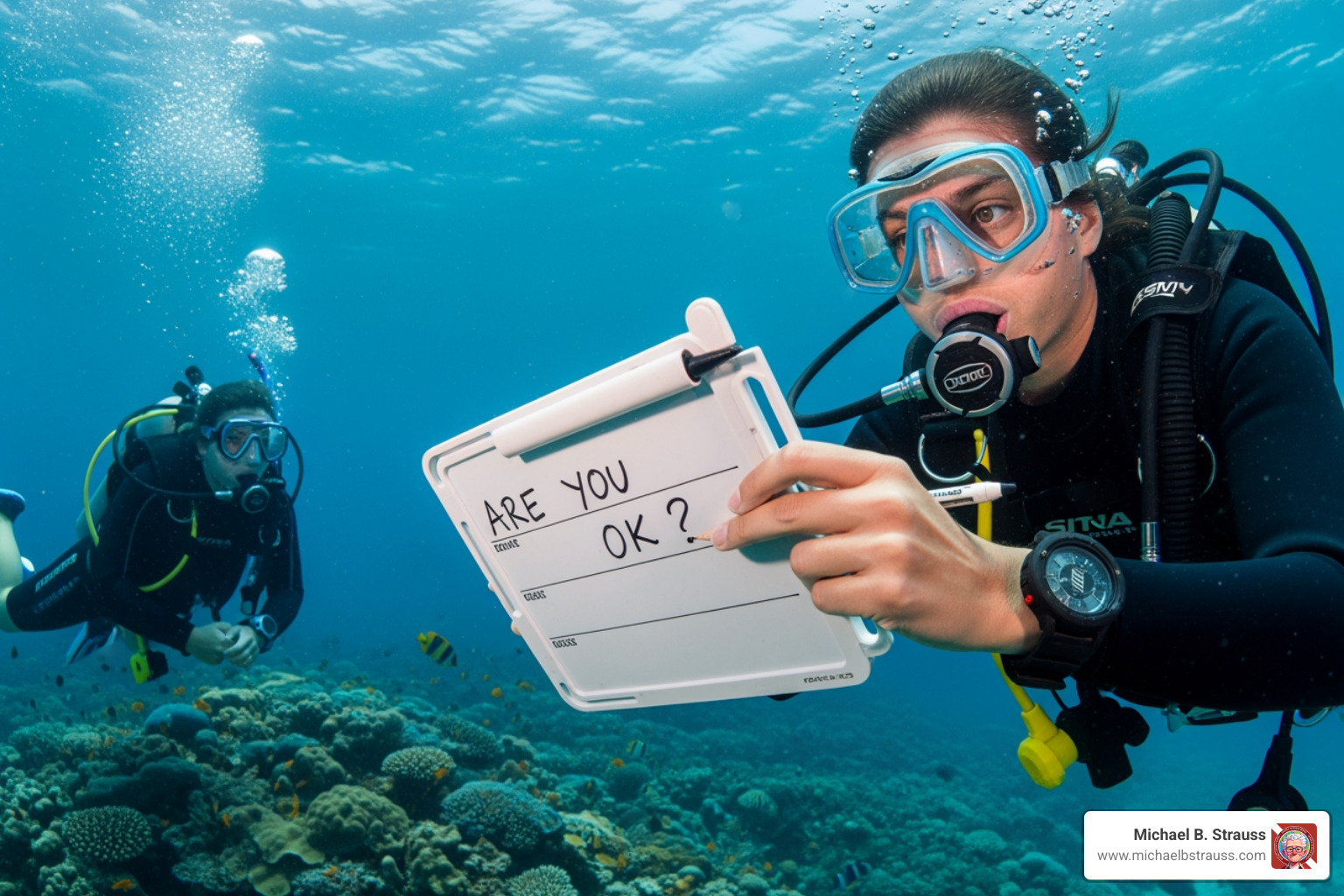
Written Communication (Slates and Wet Notes): For detailed information, dive slates or waterproof wet notes are invaluable. They allow for precise messages or diagrams but are slow to use and require a free hand.
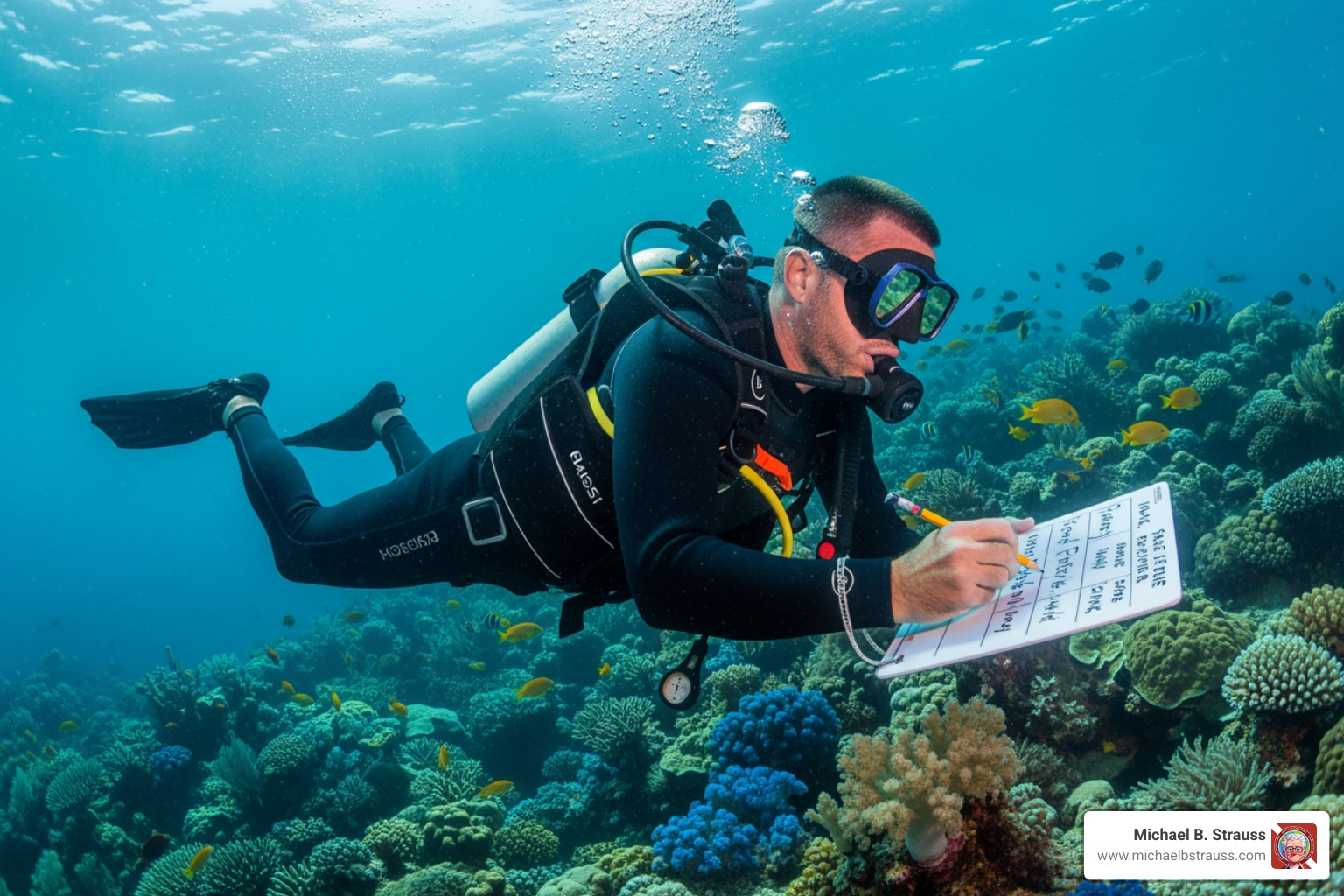
diver writing on an underwater slate - communicating underwater

Auditory Signals (Sound Devices): To get attention over a distance or in poor visibility, devices like tank bangers or shakers create a distinct sound. Their main advantage is range, but the sound's direction can be hard to pinpoint.

Touch and Line Signals: In extreme conditions like zero visibility, tactile signals are critical. Cave and commercial divers use touch and line pulls to communicate when visual methods fail.

Signal TypeAdvantagesDisadvantages
Visual (Hand, Light)Intuitive, no extra gear (hands)Limited by visibility and vocabulary
Auditory (Sound)Attention-grabbing over distanceNon-directional, simple messages only
Written (Slate)Detailed and preciseSlow, requires a free hand

The Next Wave: Voice Systems and Digital Messaging

Technology is revolutionizing underwater communication with advanced voice and digital systems.

Voice Systems: Full-face masks with integrated microphones and speakers allow for real-time conversation by converting speech into acoustic signals. The main challenge is hyperbaric speech distortion, where breathing gas at depth makes voices high-pitched and harder to understand.

Digital Messaging: The digital age has brought text messaging underwater. Some dive computers can send pre-programmed messages, while newer systems use smartphones in waterproof cases to send acoustic messages. These tools offer precision that overcomes the ambiguity of simple signals.

From Theory to Practice: Mastering Your Underwater Dialogue

Knowing the methods for communicating underwater is only half the battle; putting them into practice is what ensures a safe and enjoyable dive. Proficient communication requires preparation, practice, and a commitment to clarity.

How to Ensure Your Signals Are Always Understood

The key to successful underwater communication is eliminating ambiguity. Follow these essential practices:

  1. Conduct a Pre-Dive Briefing: Before every dive, review hand signals with your buddy. Agree on any special signals for the dive site and confirm backup communication methods.
  2. Use the Signal-and-Confirm Loop: When you give a signal, your buddy should repeat it back to confirm they understand. This simple loop prevents misinterpretation.
  3. Maintain Line-of-Sight: Visual signals depend on a clear line-of-sight. Stay close enough to your buddy to maintain this connection, especially in reduced visibility.
  4. Make Signals Clear: Hold hand signals away from your body to silhouette them against the water. In dim light, illuminate your signaling hand with your dive light.
  5. Clarify Regional Variations: Hand signals can vary by region. Always confirm signals with a new buddy or dive center to ensure you share a common language. A slate is perfect for clarifying any confusion.

Preparing for Your Dive: Practice and Further Learning

Effective communicating underwater must become second nature. Practice your skills regularly with your buddy, both on land and in controlled water environments. This builds muscle memory that will serve you well in a real diving situation.

For those looking to expand their skills, advanced courses in technical, cave, or search and recovery diving teach more complex communication methods. These courses provide invaluable training for demanding environments where clear communication is critical.

Finally, make communication tools part of your final gear check. Ensure your slate pencil is secure, sound devices are functional, and dive lights are fully charged. A tool that fails when needed is useless.

To improve your overall diving knowledge and safety, we highly recommend the comprehensive book "Diving Science" by Dr. Michael B. Strauss. His insights are invaluable for both novice and experienced divers. Get your copy today!

DISCLAIMER: Articles are for "EDUCATIONAL PURPOSES ONLY", not to be considered advice or recommendations.

Download Full PDF
Tags:

Why Clear Communication is a Diver's Lifeline

Effective communicating underwater is more than a convenience; it's a fundamental pillar of diving safety. Beneath the surface, where miscommunication can be life-threatening, divers rely on a toolkit of methods to coordinate, share experiences, and respond to emergencies. The buddy system, the cornerstone of diving safety, depends entirely on clear, unmistakable signals.

The underwater environment presents unique barriers. Sound travels four times faster in water, making it difficult for our ears to locate its source, and our vocal cords cannot produce intelligible speech. Low visibility can obscure visual cues, and essential dive gear like masks and regulators physically impede communication. These challenges make simple conversations impossible, requiring specialized techniques.

Primary Methods for Underwater Communication:

  1. Hand Signals - Standardized gestures for essential messages.
  2. Dive Lights - Flashing patterns to get attention or signal at night.
  3. Slates and Wet Notes - Written messages for complex information.
  4. Sound Devices - Tank bangers or shakers for auditory alerts.
  5. Voice Systems - Through-water communication using full-face masks.
  6. Digital Messaging - Dive computers and apps with text capabilities.

The stakes escalate in technical or emergency situations. Whether coordinating a complex maneuver in a cave, managing a decompression stop, or responding to an equipment malfunction, the ability to convey precise information quickly is critical. Mastering underwater communication ensures divers can manage risks, coordinate actions, and return safely from every dive.

infographic showing primary underwater communication methods with icons for hand signals, dive lights, writing slates, sound devices, voice systems, and digital messaging, each with brief descriptions of when to use them - communicating underwater infographic brainstorm-6-items

Basic communicating underwater vocab:

The Modern Diver's Toolkit for Communicating Underwater

Given the inherent difficulties of the underwater field, divers have developed and adopted a diverse toolkit of communication methods. Understanding and mastering these various methods is key to safe and enjoyable diving.

diver's gear laid out, highlighting a dive slate and a dive light - communicating underwater

The Foundation: Mastering Essential Hand Signals

Hand signals are the universal language of diving, standardized by bodies like the Recreational Scuba Training Council (RSTC) for clarity. They require no special equipment, but their effectiveness is limited by visibility. For signals to be clear, hold them away from your body and illuminate them with a dive light in dark conditions.

Here are 10 must-know hand signals every diver should master:

  1. OK (Question/Answer): Form a circle with your thumb and forefinger to ask or confirm you are okay.
  2. Stop/Hold: Extend your hand flat, palm forward.
  3. Ascend: Point your thumb upwards.
  4. Descend: Point your thumb downwards.
  5. Problem/Danger: Form a fist and point towards the area of concern (e.g., your ear).
  6. Low on Air: Form a fist and tap it against your chest.
  7. Out of Air: Draw a flat hand across your throat. This is a critical emergency signal.
  8. Go This Way: Point in the desired direction with an open hand.
  9. Look: Point two fingers at your eyes, then at your buddy or an object.
  10. Slow Down: Move a flat hand slowly up and down, palm down.

Always agree on number signals with your buddy before the dive. For a comprehensive guide, refer to the Minimum Course Content for Common Hand Signals for Scuba Diving from the RSTC.

Beyond Gestures: Lights, Slates, and Sound Signals

When visibility drops or a complex message is needed, divers turn to other methods.

Dive Lights: A dive light is a powerful communication tool in low light. A rapid sweep of the beam gets attention. You can then illuminate hand signals or use pre-agreed light patterns (e.g., three flashes for "OK").

Written Communication (Slates and Wet Notes): For detailed information, dive slates or waterproof wet notes are invaluable. They allow for precise messages or diagrams but are slow to use and require a free hand.

diver writing on an underwater slate - communicating underwater

Auditory Signals (Sound Devices): To get attention over a distance or in poor visibility, devices like tank bangers or shakers create a distinct sound. Their main advantage is range, but the sound's direction can be hard to pinpoint.

Touch and Line Signals: In extreme conditions like zero visibility, tactile signals are critical. Cave and commercial divers use touch and line pulls to communicate when visual methods fail.

Signal TypeAdvantagesDisadvantages
Visual (Hand, Light)Intuitive, no extra gear (hands)Limited by visibility and vocabulary
Auditory (Sound)Attention-grabbing over distanceNon-directional, simple messages only
Written (Slate)Detailed and preciseSlow, requires a free hand

The Next Wave: Voice Systems and Digital Messaging

Technology is revolutionizing underwater communication with advanced voice and digital systems.

Voice Systems: Full-face masks with integrated microphones and speakers allow for real-time conversation by converting speech into acoustic signals. The main challenge is hyperbaric speech distortion, where breathing gas at depth makes voices high-pitched and harder to understand.

Digital Messaging: The digital age has brought text messaging underwater. Some dive computers can send pre-programmed messages, while newer systems use smartphones in waterproof cases to send acoustic messages. These tools offer precision that overcomes the ambiguity of simple signals.

From Theory to Practice: Mastering Your Underwater Dialogue

Knowing the methods for communicating underwater is only half the battle; putting them into practice is what ensures a safe and enjoyable dive. Proficient communication requires preparation, practice, and a commitment to clarity.

How to Ensure Your Signals Are Always Understood

The key to successful underwater communication is eliminating ambiguity. Follow these essential practices:

  1. Conduct a Pre-Dive Briefing: Before every dive, review hand signals with your buddy. Agree on any special signals for the dive site and confirm backup communication methods.
  2. Use the Signal-and-Confirm Loop: When you give a signal, your buddy should repeat it back to confirm they understand. This simple loop prevents misinterpretation.
  3. Maintain Line-of-Sight: Visual signals depend on a clear line-of-sight. Stay close enough to your buddy to maintain this connection, especially in reduced visibility.
  4. Make Signals Clear: Hold hand signals away from your body to silhouette them against the water. In dim light, illuminate your signaling hand with your dive light.
  5. Clarify Regional Variations: Hand signals can vary by region. Always confirm signals with a new buddy or dive center to ensure you share a common language. A slate is perfect for clarifying any confusion.

Preparing for Your Dive: Practice and Further Learning

Effective communicating underwater must become second nature. Practice your skills regularly with your buddy, both on land and in controlled water environments. This builds muscle memory that will serve you well in a real diving situation.

For those looking to expand their skills, advanced courses in technical, cave, or search and recovery diving teach more complex communication methods. These courses provide invaluable training for demanding environments where clear communication is critical.

Finally, make communication tools part of your final gear check. Ensure your slate pencil is secure, sound devices are functional, and dive lights are fully charged. A tool that fails when needed is useless.

To improve your overall diving knowledge and safety, we highly recommend the comprehensive book "Diving Science" by Dr. Michael B. Strauss. His insights are invaluable for both novice and experienced divers. Get your copy today!

DISCLAIMER: Articles are for "EDUCATIONAL PURPOSES ONLY", not to be considered advice or recommendations.